Bramatherium Contents Etymology Description See also References External links Navigation menu4269348354671120890expanding ite
Pliocene extinctionsPliocene even-toed ungulatesPrehistoric giraffesPrehistoric mammal generaMiocene first appearancesMiocene mammals of AsiaPliocene mammals of AsiaFossil taxa described in 1845Prehistoric even-toed ungulate stubs
BrahmagenusgiraffeIndiaTurkeyAsiaBrahmaSanskritHindugodcreationGreekOkapiossicones
Bramatherium Temporal range: Late Miocene[1]-Pliocene | |
|---|---|
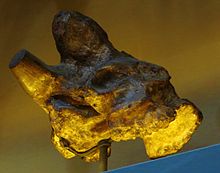 | |
Bramatherium perimense skull | |
Scientific classification  | |
| Kingdom: | Animalia |
| Phylum: | Chordata |
| Class: | Mammalia |
| Order: | Artiodactyla |
| Family: | Giraffidae |
| Genus: | †Bramatherium Falconer, 1845 |
| Species | |
| |
Bramatherium (Brahma’s beast) is an extinct genus of giraffe that ranged from India to Turkey in Asia. It is closely related to the larger Sivatherium.
Contents
1 Etymology
2 Description
3 See also
4 References
5 External links
Etymology

Bramatherium perimense skull
The first part of the generic name, Brahma (Sanskrit masculine brahman-, nominative brahmā ब्रह्मा), is in reference to the Hindu god of creation. The second part, "therium", comes from the Greek word θηρίον (transliterated therion), meaning 'beast'.
Description
Bramatherium was built very similarly to Sivatherium. Alive, it would have resembled a heavily built Okapi and had a crown-like set of four, radiating ossicones.
See also
- Hydaspitherium
- Sivatherium
- Vishnutherium
References
^ Geraads, Denis, and Erksin Güleç. "A Bramatherium skull (Giraffidae, Mammalia) from the late Miocene of Kavakdere (Central Turkey). Biogeographic and phylogenetic implications." Mineral Res. Expl. Bul 121 (1999): 51–56.
- Falconer, H. (1845) “Description of some fossil remains of Deinotherium, Giraffe, and other mammalia, from Perim Island, Gulf of Cambay, Western Coast of India”, J. Geol. Soc., 1, 356–372.
External links
http://webcache.googleusercontent.com/search?q=cache:EEby4EfUJA8J:www.mta.gov.tr/english/dergi/dergi_pdf/121/4.pdf+Bramatherium&hl=en&ct=clnk&cd=3&gl=us[dead link]
 | This prehistoric even-toed ungulate-related article is a stub. You can help Wikipedia by expanding it. |
Fossil taxa described in 1845, Miocene first appearances, Miocene mammals of Asia, Pliocene even-toed ungulates, Pliocene extinctions, Pliocene mammals of Asia, Prehistoric even-toed ungulate stubs, Prehistoric giraffes, Prehistoric mammal generaUncategorized


